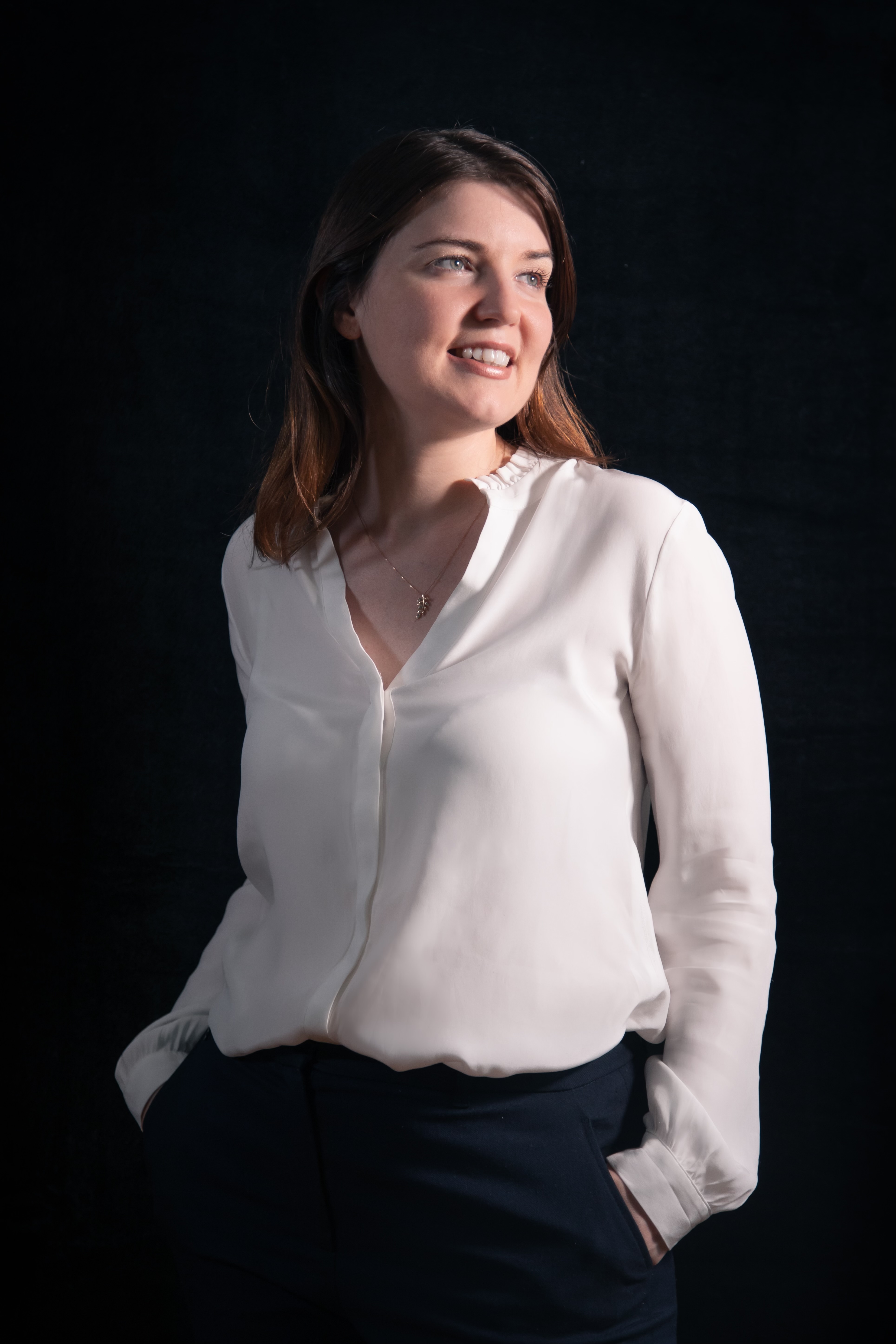
Claire Boine
Assistant Professor in Technology Law and AI Governance
Assistant Professor in Technology Law and AI Governance
Claire is an Assistant Professor in Technology Law and AI Governance at the European University Institute School of Transnational Governance and a Visiting Research Associate at the Cordell Institute of the Washington University School of Law. Before this, she was a postdoctoral fellow specialized in AI law at the Washington University Law School and an AI For Humanity Fellow at Mila Quebec. With a PhD in technology law from the University of Ottawa, a Masters in Public Policy from Harvard Kennedy School, and her J.D. in EU law from Nantes University, Claire is an expert of General Purpose AI regulation and has consulted for several governments on the topic. Before the release of ChatGPT, Claire published the first law journal article arguing that GPT-3 and General Purpose AI systems were not regulated under the draft AI Act. She has also worked on diverse AI law topics such as AI and democracy, algorithmic bias, AI and gender, and AI-enabled manipulation.
Claire holds a PhD in AI law from the University of Ottawa. Her dissertation examined how unchallenged assumptions built into European Union AI law have left it unable to keep up with the technology it is meant to govern. She traced this through three cases. For General Purpose AI, she argued that the early legal frameworks rested on outdated beliefs about the relationship between data, capability, and harm, which made them a poor fit for the challenges that GPAI actually poses. For AI-enabled manipulation, she showed that EU law rests on flawed assumptions about human rationality and free will, producing a ban so narrow that it misses most manipulative practices. For AI companions, she documented the concrete harms these gaps allow, from emotional distress to serious psychological manipulation. By surfacing these hidden assumptions, her work shows how they shaped major legal instruments such as the AI Act, the GDPR, and the Unfair Commercial Practices Directive, leaving people poorly protected from the risks of advanced AI systems.
As an undergraduate, she studied history to identify what was universal and what was relative in human societies. Wanting to approach complex problems from a multidisciplinary background, she also obtained a Master in Public Policy (Harvard University), a JD (Master 2) in International Law (Nantes Law School), a Master in political science (Toulouse University) and a graduate diploma in Conflict Analysis (Toulouse University). Her law thesis tackled the laws and policies to prevent child trafficking into France. Her MPP thesis at Harvard was about finding ways to scale up American anti-trafficking policies across the world.
In 2024, at Mila, Claire led a consultation for Innovation, Science and Economic Development Canada (ISED) on the capabilities, limitations and risks of General Purpose AI. The same year, she conducted another one with CEIMIA on the risks of AI on elections in Quebec. In 2022, Claire cofounded Successif, a nonprofit organization that supports individuals and organizations in AI safety through trainings, coaching, and community-building. Between June 2021 and September 2022, Claire Boine was a Senior Policy Research Fellow at the Future of Life Institute. There, she worked on the application of fiduciary law to AI systems, on AI-enabled manipulation, on General Purpose AI systems, and on AI liability law in the EU. She also served in the OECD expert group on Policies for AI (ONE PAI) and was a member of the IEEE working group on ethically driven nudging.
From January 2018 to November 2021, Claire was a Research Scholar at the Boston University School of Public Health. Her research was funded by a grant from the Robert Wood Johnson Foundation. Focusing on American gun culture, she explored the social identity of gun owners and shared values between gun owners and non gun owners. Passionate about what values drive people, and how they form collective identities, she used methods drawn from psychology, sociology, political science as well as quantitative methods and machine learning. She also conducted research about the predictors of firearm violence and how to reduce homicide rates. Claire is still an expert in the Regional Gun Violence Research Consortium.
Claire has worked on racial and gender algorithmic biases, manipulation risks from AI, as well as human-computer interaction and social robotics. She is passionate about how technology is impacting the future of human life, from the consequences on social interactions to existential risks.
In the public sphere, Claire has generated ideas in many areas. An out-of-the-box thinker, she identifies needs, generates ideas to meet them, and connects the right actors to move the projects forward. In 2017, inspired by the practical experience American gain in their studies, she created Apportez vos talents à l'innovation publique and recruited Harvard and MIT students to be hosted in French public organizations in Toulouse, where they participated in classes, a hackathon and public service internships.
Claire has played leadership roles in the French community in Boston. For the French Consulate in Boston, she chaired a workgroup that authored a report on brain drain out of France. She also pushed for the Consulate to bring gender equality to the top of their agenda, which led to the organization of the International Symposium on Education and Gender Equality at Wellesley College.
During her time at Harvard, Claire was selected as a participant in the Emerging Human Rights Leaders Program at the Carr’s Center for Human Rights (2016-2017). In the summer 2016, she conducted a monitoring and evaluation mission of an anti-trafficking program conducted in Haiti by Free The Slaves.
In 2015, Claire participated in the Asylum Law Clinic at the Harvard Law School and was granted honors for her clinical work with asylum seekers. Passionate about it, she worked pro-bono on four cases. Before coming to the U.S., Claire worked as a history teacher in both traditional and pedagogically innovative settings.
Claire also chaired the HKS Francophile Club and co-chaired the Harvard Club of France on Campus. In that capacity, she ideated and organized the Diversity and inclusion: French and American perspectives symposium at the Harvard Kennedy School, gathering 50 French and American speakers and 200 participants. In 2020, she was one of the three organizers of the Night of Philosophy and Ideas at Harvard, which drew 900 attendees. Claire also served as a member of the Board of the HKS Women’s Network, where she managed 50 global chapters. She also organized the 2021 Rewind & Empower Conference.
Claire is an occasional peer-reviewer for academic journals including the American Journal of Public Health, Health Communication, the Social Science Journal, Sociological Perspectives, etc (see verified reviews here).